Learning to see, not just look
Since 2017, we've been teaching portrait drawing through a method that prioritizes observation skills and direct visual analysis over copying techniques.
What we actually do
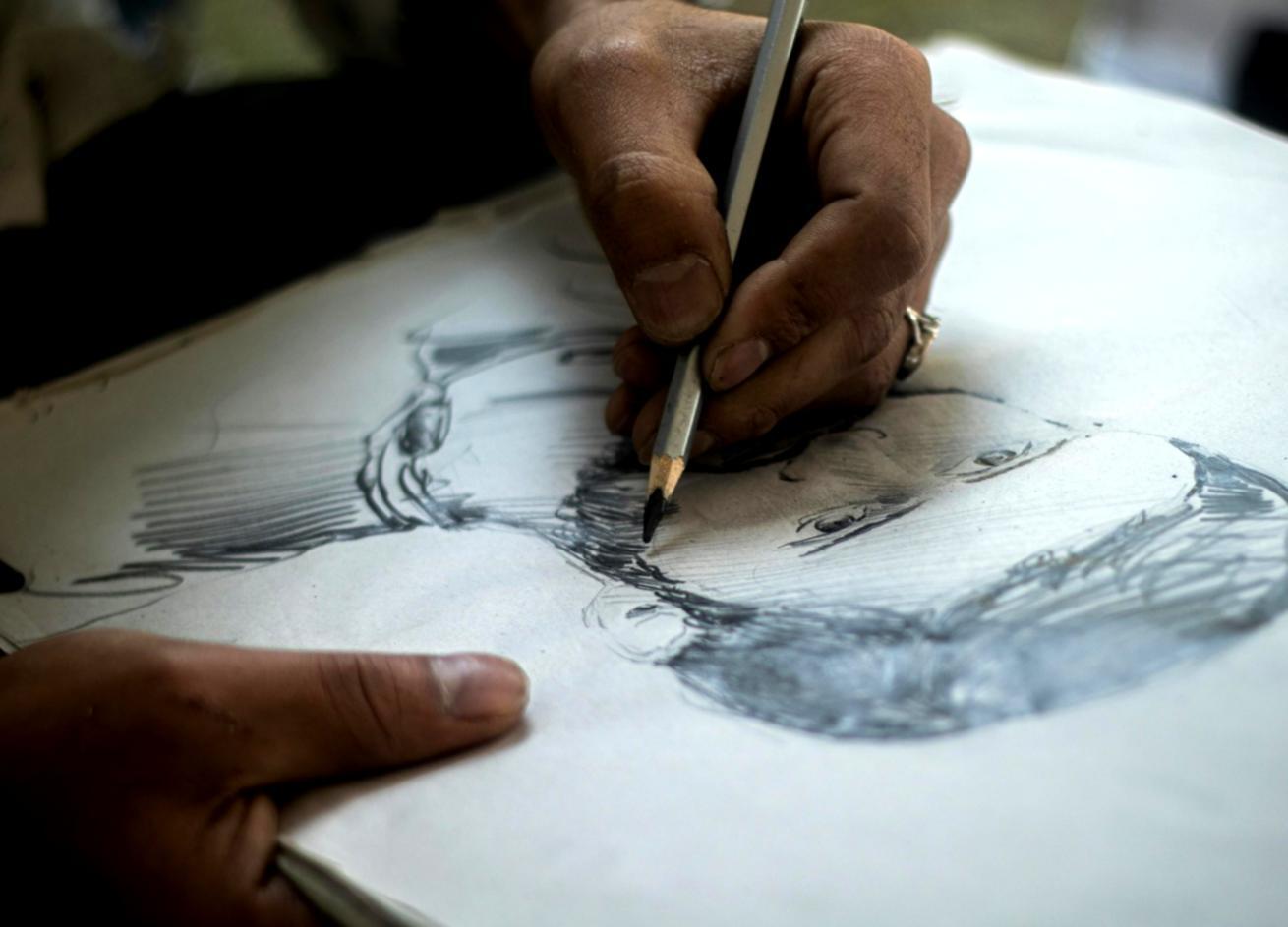
We started with a simple observation: most drawing courses focus on technique steps and copying procedures, but they skip the hardest part. Learning to see proportions, angles, and spatial relationships takes time and direct practice. You can memorize all the construction methods, but if you can't judge whether a line is at 45 or 60 degrees, those methods won't help much.
So we built courses around measurement exercises, comparative analysis, and constant visual feedback. Students learn to check their own work against reference points, identify what's off, and correct it before moving forward. It's slower than following a step-by-step demo, but the skill stays with you. Once you can accurately see what's in front of you, technique becomes much easier to apply.
We work with both group sessions and individual lessons because different people need different pacing. Group classes provide structure and peer reference points. Individual sessions let instructors address specific seeing habits that need correction. Most students combine both formats depending on where they are in their progress.

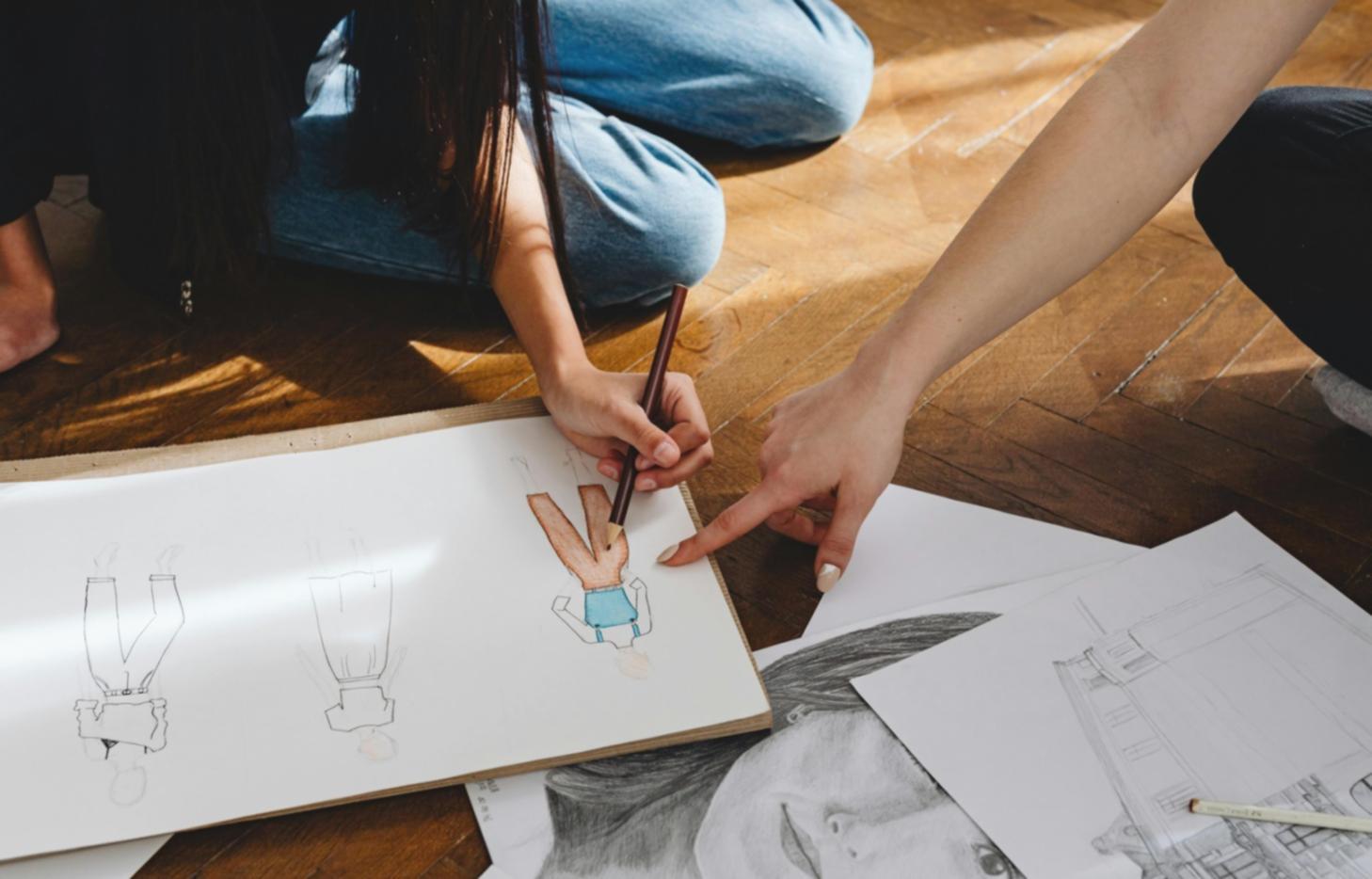
Our instructors have all worked through this measurement-first approach themselves. They know where students typically misread angles or skip proportion checks. They can spot when someone is drawing from memory instead of observation and redirect the focus back to direct seeing. This isn't about correcting lines on paper, it's about training perception.
The online format works because we use live video with screen sharing for real-time feedback. Students show their setup, their reference, and their work in progress. Instructors can see exactly what the student is seeing and point out measurement discrepancies as they happen. The back-and-forth happens at a practical pace that allows for immediate course correction.
How we structure learning
Measurement first
Every session begins with proportion analysis and angle checking before any shading or detail work. Students learn to establish accurate spatial relationships as the foundation for everything else.
Live feedback loops
Instructors review work in progress during the session, not after completion. This allows students to fix perception errors immediately rather than reinforcing incorrect seeing habits through an entire drawing.
Adaptive pacing
Students move through material based on measurement accuracy, not time spent. Some people develop seeing skills quickly, others need more repetition. Progress is determined by demonstrated ability to judge proportions correctly.
What students actually work on
The curriculum breaks down into three main skill areas that build on each other. Each area has specific exercises designed to develop the underlying perceptual ability, not just produce finished drawings.
Building accurate spatial relationships
Students learn to establish the basic structure of a face through comparative measurement. This involves checking angles between features, measuring distances in relation to each other, and verifying alignment across the face. The goal is to create an accurate map before adding any detail or shading.
We use exercises that isolate this skill: drawing just the placement of features without rendering them, checking angles with measurement tools, and comparing proportions against known reference points. Most students spend 4-6 weeks developing this foundation before moving to more complex work.
- Angular relationship checking between eyes, nose, and mouth placement
- Proportional distance measurement using comparative analysis methods
- Symmetry verification through centerline alignment and cross-checking
- Head shape construction using primary proportion divisions
Understanding light and form
Once proportion accuracy is established, students move to value work. This means learning to see the pattern of light and shadow that describes three-dimensional form. The challenge is to simplify what you see into distinct value zones rather than trying to capture every subtle gradation at once.
We start with high-contrast references where light and shadow areas are clearly separated. Students map out these zones, check their boundaries, and build up value gradually. The focus is on maintaining structural accuracy while adding tonal information that enhances rather than contradicts the underlying form.
- Shadow shape mapping with attention to edge quality and boundaries
- Value scale construction from lightest lights to darkest darks
- Core shadow identification showing the form's turning point
- Reflected light analysis within shadow areas for form clarity
Controlling transitions and definition
Edge quality determines whether a portrait looks flat or dimensional. Students learn to vary their edges: some sharp and defined, others soft and gradual. This requires understanding where the form turns abruptly (hard edge) versus where it curves gradually (soft edge), and translating that knowledge into appropriate mark-making.
Edge control exercises focus on deliberate decision-making. Students practice creating specific edge types, then apply those skills to portrait work where edge variation follows the actual form structure. The goal is conscious control over how much definition each area receives.
- Hard edge placement at structural turning points and feature boundaries
- Soft edge rendering where form curves gradually into shadow
- Lost edge identification where forms merge with similar values
- Edge variety application following the reference's actual form structure
What we prioritize
Accurate seeing over style
We emphasize measurement accuracy and proportion checking before any stylistic choices. Style develops naturally once you can draw what's actually there. Pushing students toward a particular look before they can see accurately just creates dependency on copying rather than observation.
Process over finished pieces
A drawing that looks good but was done through guessing and adjustment teaches nothing for the next one. A drawing with accurate structure teaches measurement skills that transfer to every future work. We focus on the thinking process that produces accuracy, not surface-level results.
Direct feedback during work
Waiting until a drawing is complete to get feedback means reinforcing errors through hours of practice. We provide real-time correction during the drawing process so students can adjust their seeing immediately. This creates faster learning because mistakes get caught at the perception stage.
Flexible learning structures
Some students benefit from the accountability and peer comparison of group sessions. Others need the focused attention of individual instruction to correct specific perception habits. We provide both options because effective learning depends on matching the format to the student's current needs.